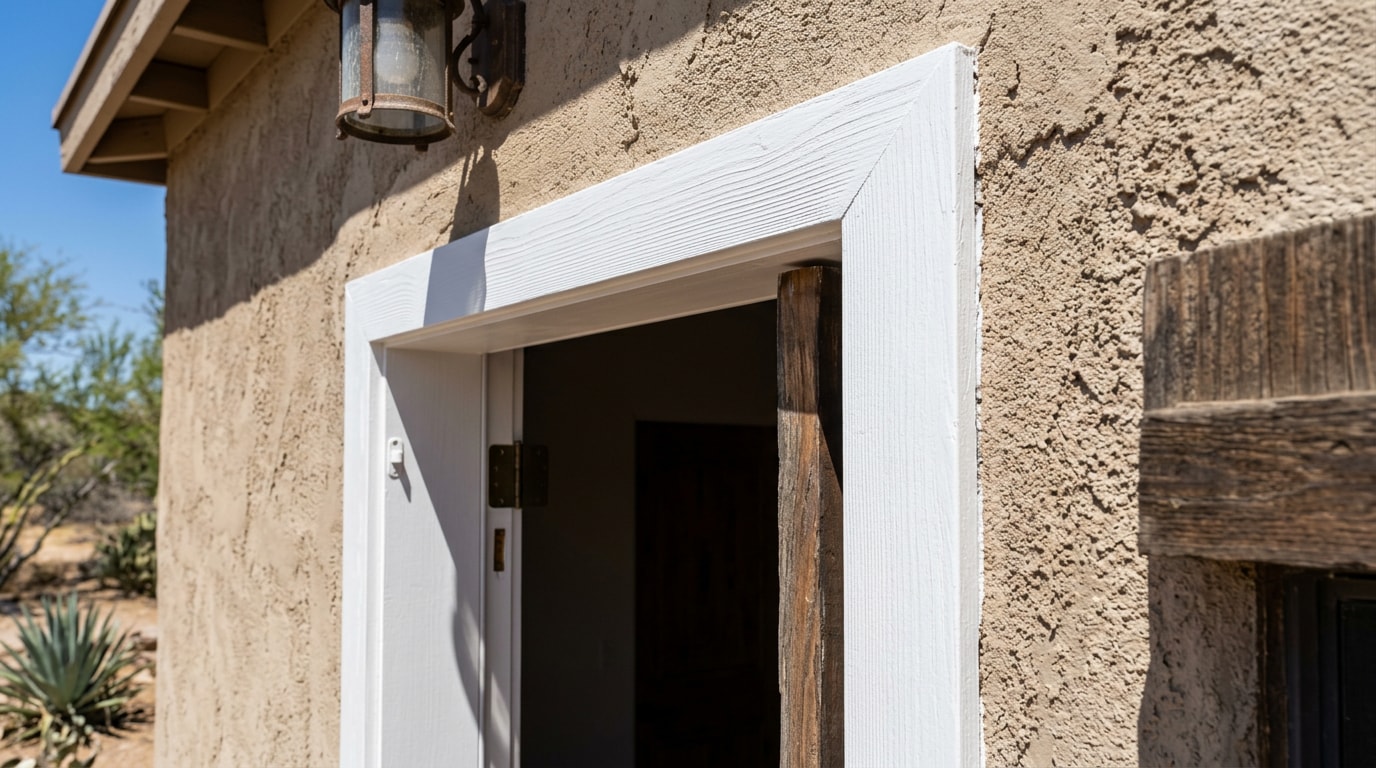
Painting an exterior door frame in Kingman, AZ, takes different prep and products than it would in a milder climate, because Mojave Desert heat and UV punish ordinary trim paint fast. We've repainted frames across Mohave County that started chalking and hairline-cracking within a single summer because a homeowner grabbed whatever latex was on sale. This guide covers the tools, step-by-step technique, and real cost numbers that actually hold up here, whether you DIY it or call in a pro.
Why Kingman's Climate Changes the Job
Kingman sits in a high-desert zone with a classic hot-summer, dry-winter pattern. Average highs climb into the 90s by June and often push past 100°F in July, the warmest month of the year, while relative humidity can drop into the teens.
That combination matters more for door frames than almost any other painted surface on the house. A south- or west-facing frame absorbs direct sun for hours, and the dry air accelerates how fast paint skins over before it has a chance to level out smoothly.
Low-grade latex paint handles that stress poorly. It chalks, fades, and loses adhesion years before it would in a coastal or humid climate, which is why so many Kingman homeowners find themselves repainting trim every year or two instead of every five to seven.
Tools and Materials You'll Need
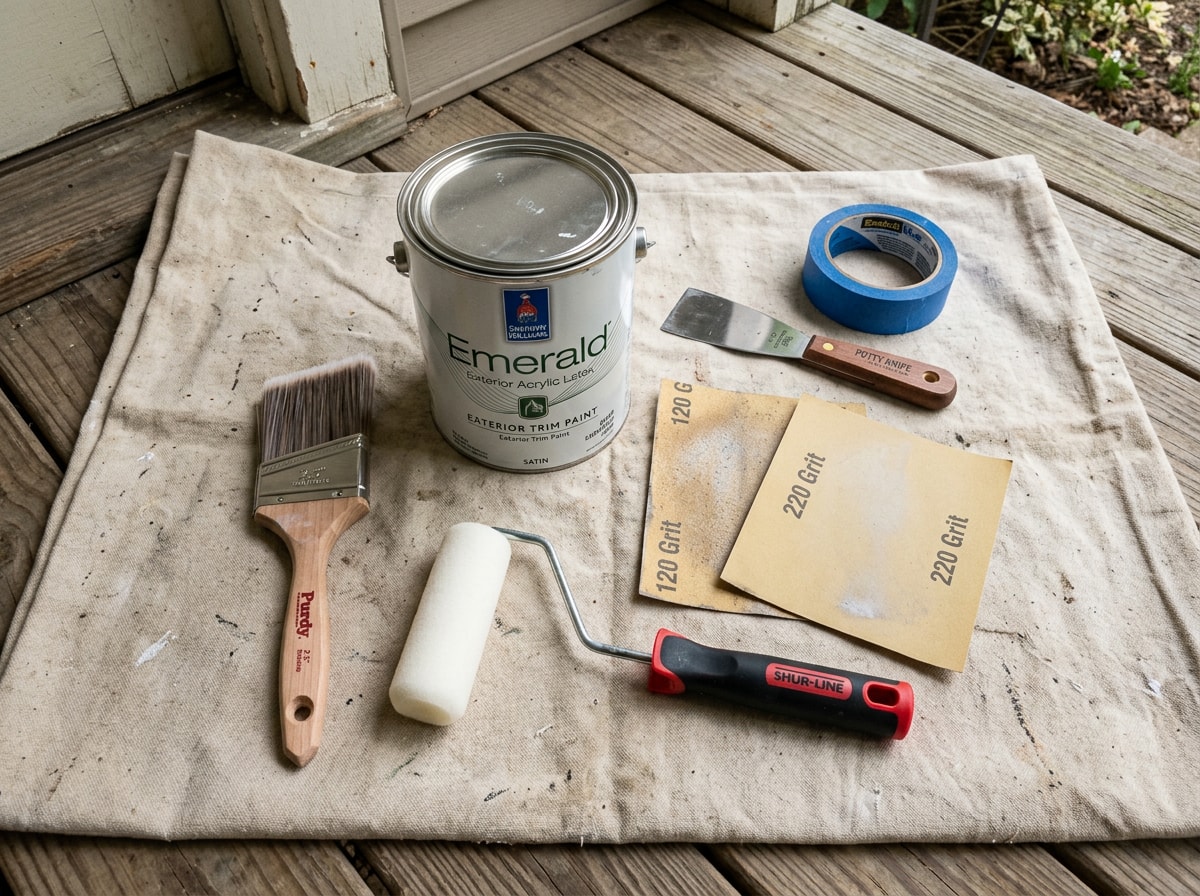
Painting an exterior door frame requires an angled brush, mini roller, two grits of sandpaper, wood filler, painter's tape, and a 100% acrylic exterior trim paint built for high-UV climates. Gather everything before you start so you're not stopping mid-coat to hunt for supplies.
At minimum, you'll want:
- A 2 to 2.5-inch angled paintbrush for cutting in corners and tight jamb edges
- A mini foam roller for flat panel sections
- 120-grit and 220-grit sandpaper
- Wood filler or flexible exterior-grade caulk
- Painter's tape and canvas drop cloths
- 100% acrylic exterior trim paint
Generic latex often isn't enough for Kingman's climate. A 100% acrylic, UV-resistant exterior enamel flexes with temperature swings and resists chalking far longer than a generic blend. Sherwin-Williams' Duration exterior acrylic coating is one example built specifically for durability in sun-exposed climates, and its product page lists the coverage rates and application window worth checking before you buy.
For help picking a product rated for Mohave County conditions, see our exterior painting services or our trim painting services.
How to Prep an Exterior Door Frame for Painting
Good prep determines how long paint lasts far more than brand choice does. Before touching a brush, mask nearby siding, hardware, and glass with tape and drop cloths.
Remove the Door and Hardware
Tap the hinge pins out from the bottom up with a nail and hammer, then lift the door free and set it on sawhorses. Removing the door gives better access to edges and the jamb, and it keeps drips off the threshold.
For a frame that's in good shape, you can skip removal and paint the door in place. Just work carefully around the hinges and strike plate with tape.
Either way, take off knobs, strike plates, and weatherstripping so you get clean paint lines instead of painting around hardware.
If your Kingman home was built before 1978, assume the existing paint may contain lead until tested. Sanding or scraping it without precautions can release hazardous dust. The EPA's Renovation, Repair and Painting Rule outlines the certification and work practices required for paid contractors on pre-1978 homes, and the same safe-handling principles apply to DIY projects.
Clean, Sand, and Fill Imperfections
Wipe the frame down with a degreaser or mild dish soap solution to remove dust, pollen, and grease, then let it dry completely. Dirt and oils trapped under new paint are a top reason coats peel early in dry, dusty climates like Kingman's. If the whole exterior is grimy, our exterior surface cleaning service can handle that before paint day.
Sand starting with 120-grit to knock down old paint ridges and rough spots, then switch to 220-grit for a smooth final pass. Wipe away sanding dust with a tack cloth before moving on.
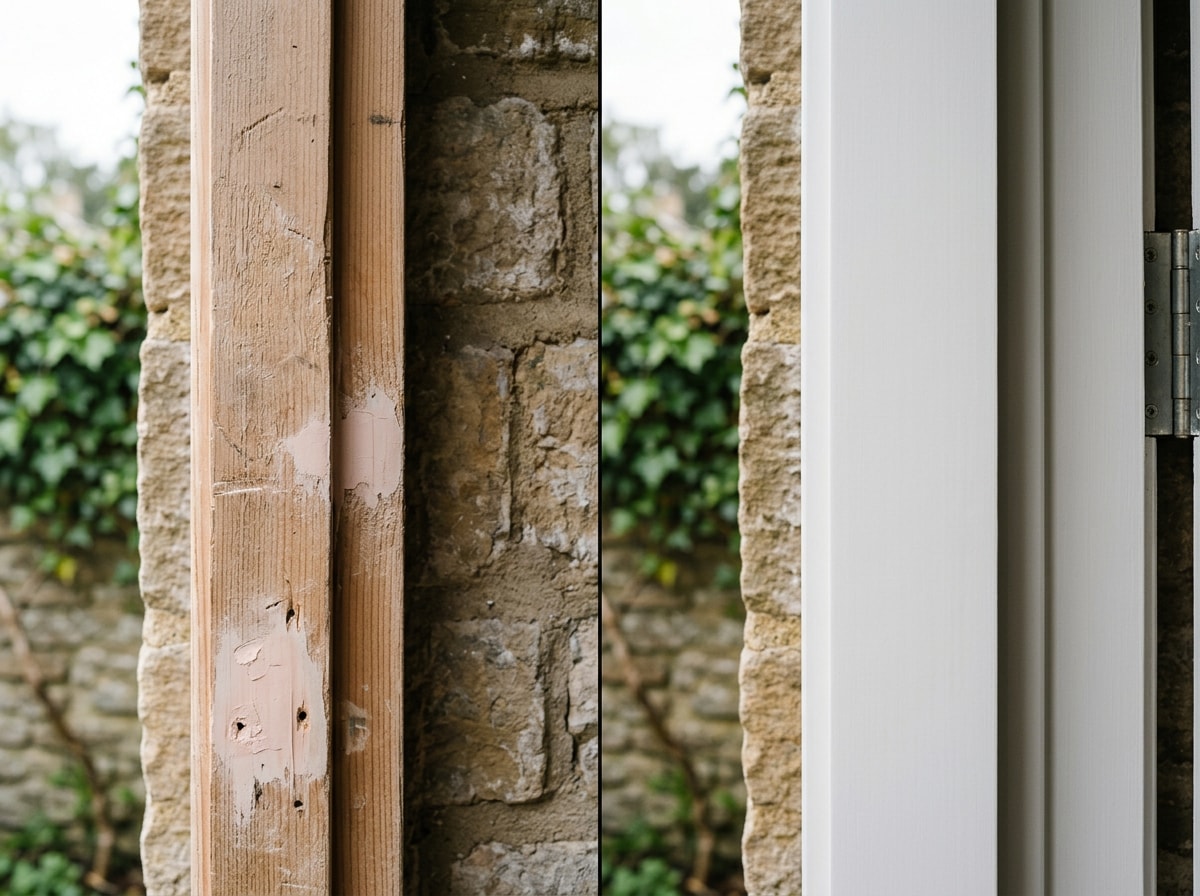
Use wood filler or flexible exterior caulk to fill cracks, nail holes, and gaps where the frame meets the wall. Let filler cure fully, usually a few hours, then sand it flush so it disappears under the topcoat.
How to Paint a Door Frame Step by Step
Once the frame is clean, dry, and primed if needed, work from the top down so drips land on sections you haven't painted yet. Most frames need two coats, starting with the jamb before moving to the flat trim faces.
Painting the Door Jamb
Start at the top inside corner of the jamb and work down in long, even strokes, overlapping each pass by about half an inch to avoid lap marks. Paint both sides of the jamb before finishing the top piece last. This order keeps wet edges from drying before you blend them.
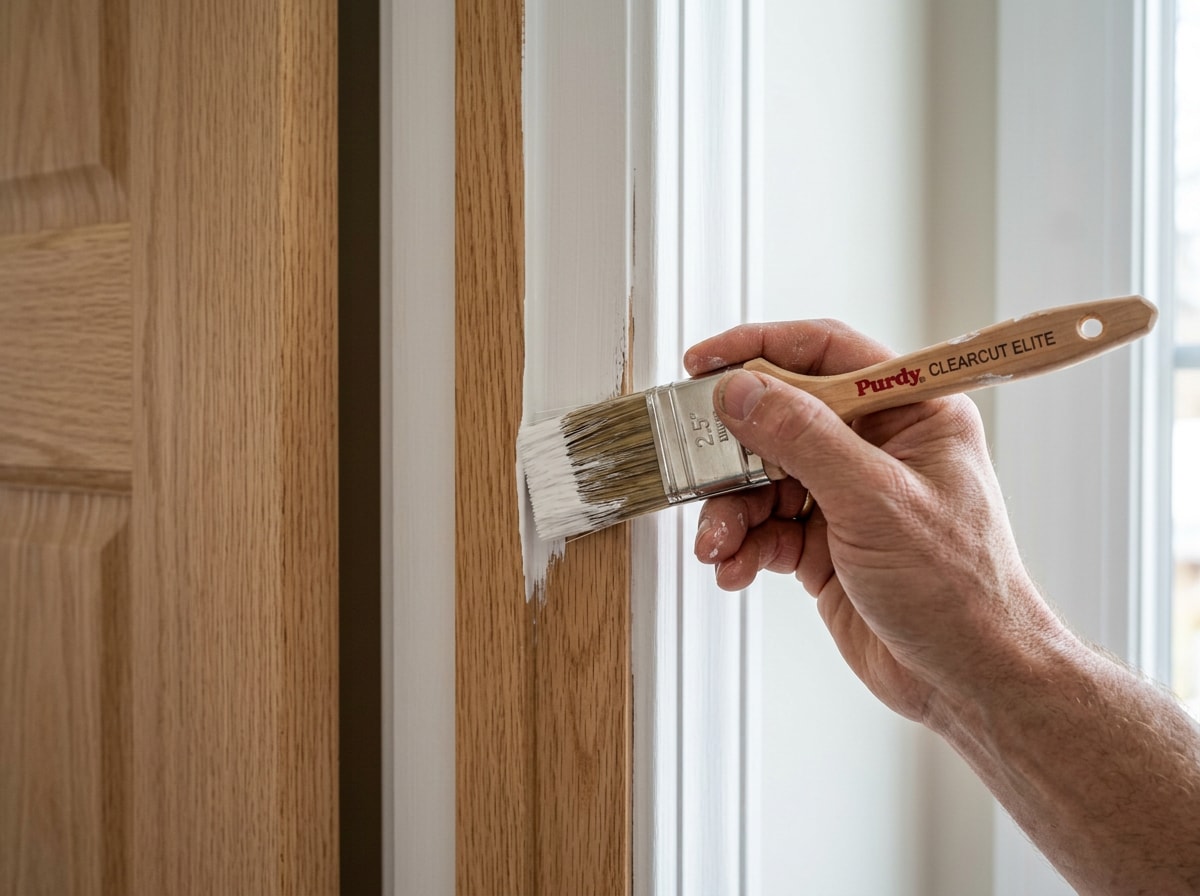
For the flat jamb faces, a brush-only technique gives more control in corners but can leave faint ridges if you're not experienced with a steady hand. A mini roller lays down a more uniform film faster, then a dry brush pass smooths any stipple texture left behind.
Keep coats thin to avoid drips, and respect recoat timing. Most exterior acrylics need at least four hours before a second coat, though Kingman's dry air often speeds that along on anything but the hottest afternoons.
Tips for a Smooth, Professional Finish
A few habits separate an amateur-looking job from one that holds up:
- Brush or roll with the wood grain, not against it, to avoid visible texture once dry.
- Use long, continuous strokes. Short, choppy strokes are the most common cause of brush marks.
- Apply thin coats rather than one heavy coat. Thin layers resist sagging in the heat and build better coverage over two or three passes.
- Follow the manufacturer's recoat window on the can. Painting over a coat that hasn't cured can trap solvents and cause cracking months later.
- Avoid painting trim in direct afternoon sun during peak summer. Early morning or evening gives the paint more time to level before it skins over.
Cost to Paint an Exterior Door Frame in Kingman
Material-only costs stay low, while professional labor, prep work, and trip charges push the total up. Painters nationally charge based on size and condition, and Kingman rates generally track the broader Southwest market.
| Approach | Typical Cost Range | What's Included |
|---|---|---|
| DIY, light prep | $40 to $70 | Paint, filler, sandpaper, brush, using tools you already own |
| Professional, basic frame only | $20 to $80 | Light cleaning, sanding, masking, two coats on a frame in good condition |
| Professional, frame with moderate prep | $150 to $250 | Caulking, spot priming, hardware removal, two coats |
| Professional, full door and frame repaint | $180 to $520 | Heavy prep, priming, hardware removal and reinstall, two coats on both surfaces |
Labor typically makes up 50% to 70% of a professional quote, which is why DIY saves the most on straightforward jobs. The Bureau of Labor Statistics reports a median annual wage of $48,660 for construction and maintenance painters nationally, which helps explain the hourly rates behind these quotes.
Door condition drives most of the price gap. Rot repair, heavy scraping, or lead-safe practices add hours of labor that a healthy frame wouldn't need. You can save money by handling cleaning and sanding yourself before a pro arrives, or by bundling multiple doors into one visit to spread the trip charge.
Ready to get a number for your specific frame? Get a free estimate and we'll walk the job with you before quoting anything.
If you're tackling other exterior repairs nearby, our House Painting and Repairs in Bullhead City, AZ guide covers similar prep and paint choices for the same desert climate.
FAQ
How long does it take to paint an exterior door frame?
Plan on 3 to 5 hours total: about an hour for prep, 1 to 2 hours for two coats, and 2 to 4 hours of drying time between coats. Kingman's dry air often speeds drying, but direct summer sun can cause paint to skin too fast, leading to brush marks if you rush.
Do you need to remove the door to paint the frame?
Not always. If hinges, hardware, and surrounding trim are in good condition, you can paint the frame without removing the door, just tape off the slab and hardware carefully. Removing the door makes sense when the frame needs heavy sanding, filling, or a flawless finish on hard-to-reach edges.
What is the best paint sheen for an exterior door frame?
Satin or semi-gloss sheens hold up best because they resist dirt, moisture, and UV fading better than flat finishes. Semi-gloss shows wear more but cleans up easier, while satin hides minor imperfections better.
What is the best type of paint for exterior door frames in Kingman's climate?
100% acrylic latex is the standard choice because it flexes with Kingman's wide temperature swings and resists UV fading better than oil-based paint. Oil-based paint cures harder but yellows over time and chips more easily when summer heat and winter cold stretch the wood at different rates.
How much does it cost to paint an exterior door frame?
A basic professional job on a frame in good condition runs $20 to $80. Add caulking, spot priming, and hardware removal and the range moves to $150 to $250. A full door-and-frame repaint with heavy prep can run $180 to $520.
What time of year is best for exterior painting in Kingman?
Spring and fall give you the widest comfortable window, since summer surface temperatures on sun-facing frames can exceed the application limits printed on most paint cans. If you're painting in summer, work early morning or evening and avoid direct afternoon sun on the frame.
Have a question we didn't cover, or want to see examples of recent work? Visit our homepage or check out completed projects from around Kingman and the surrounding area, including Bullhead City, Fort Mohave, and Lake Havasu City.